
Welcome to IKU Institutional Repository


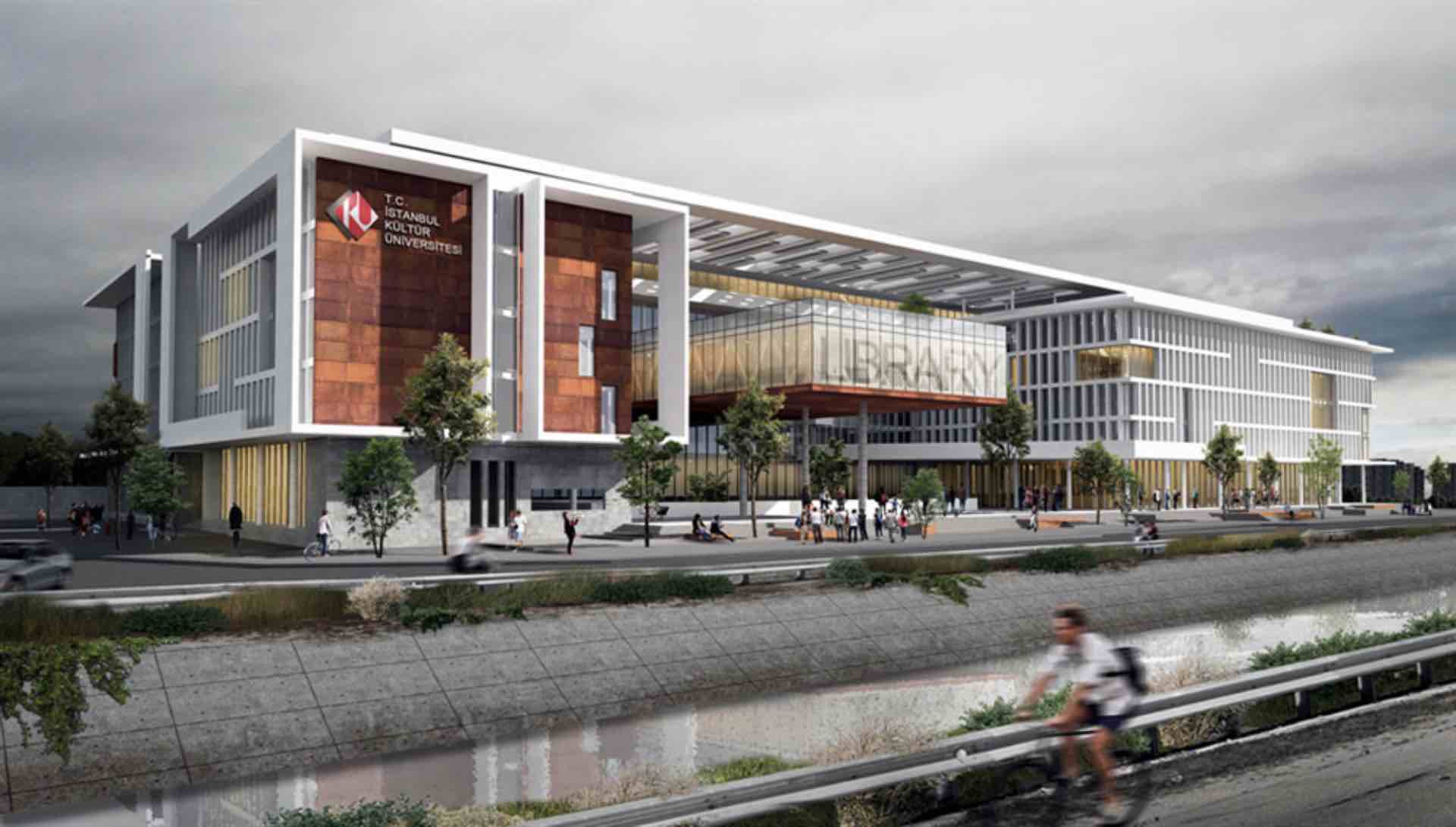
OpenAccess@IKU is Istanbul Kultur University's Institutional Repository , established in June 2014 to digitally store and provide open access to academic and artistic outputs in line with international standards and intellectual property rights. The system includes various outputs such as articles, presentations, theses, books, book chapters, reports, encyclopedias, and works of art produced by the university's faculty members and students.
Supported by @SelenSoft Yazılım


Recent Submissions

  • Item type:Person,
    ÇEVİK, AYŞE NESLİGÜL
    Arş. Gör.
  • Item type:Publication,
    Algorithmic Replication of Macramé Techniques: Bridging Analog Movements With Computational Design
    (Emerald Publishing, 2025) ÇEVİK, AYŞE NESLİGÜL; Açıkgöz, Ece Kumkale
    PurposeThis study explores how traditional macram & eacute; techniques can be digitally controlled and automated, contributing to the preservation of cultural heritage and offering a new perspective for innovative architectural applications. By translating macram & eacute;'s knot-making process into a computational model, this research aims to protect traditional know-how and transfer it to future generations while addressing modern design challenges related to adaptive, sustainable building solutions.Design/methodology/approachThe research involves a review of literature on the geometric and mechanical analysis of macram & eacute; weaving, focusing on knot tightness, yarn thickness and the resulting structural rigidity, as well as their digital counterparts. By using Rhino/Grasshopper, the study develops an adaptable digital macram & eacute; model capable of mimicking analog knot-making movements. In addition, two parametric variations (tight vs. loose knots) were tested as daylight-control systems through digital simulation. Luminance data were analyzed using ImageJ, incorporating brightness histograms and false-color heatmaps to assess performance.FindingsThe study demonstrates that digital simulations of macram & eacute; movements can enhance both the precision of production and its adaptability to architectural applications such as shading and airflow modulation. The luminance analysis indicates a substantial variation in daylight performance based on knot tightness. However, the current parametric script is limited in its adaptability to 3D geometries due to coordinate system constraints, which are discussed as a key area for future development.Originality/valueThis research advances the field of digital-analog integration by developing an algorithm that not only replicates traditional macram & eacute; movements but also tests their performance in a building context. By digitally preserving cultural knowledge and applying it in adaptive fa & ccedil;ade systems, the study aligns with SDG 11 (Sustainable Cities and Communities) and SDG 9 (Industry, Innovation and Infrastructure), demonstrating how traditional crafts can inform sustainable and responsive architectural solutions.
  • Item type:Publication, Access status: Restricted ,
    Relationship Between Colours and Emotions as Reflected in Children's Drawings
    (John Wiley and Sons Ltd, 2025) AYDOS, EMİNE HANDE; Özet, Bahar
    Children articulate their emotions and experiences through drawings and the colours they incorporate into them. This study investigated the relationship between preschool children's colour preferences, the emotions those colours elicit, and how they convey their emotions and thoughts through drawings. The participants, comprising 30 children (19 girls and 11 boys) in Istanbul, were prompted to select a colour card that best represented their feelings and draw a visual representation of their current emotions. Most children linked a single emotion to a specific colour, whereas others demonstrated more intricate emotional representations by associating multiple emotions with one colour. Colour-emotion associations were highly individualised, although some general patterns were observed, and this showcased individual variability shaped by experiences, interactions, and environmental influences. Their drawings predominantly portrayed positive emotions related to family interactions, friendships, and pleasurable activities. Negative emotions were associated with loss, separation, or challenges. These results emphasise the importance of integrating art-based activities into early childhood education to support emotional literacy and communication.
  • Item type:Publication,
    Targeting Glioblastoma: Investigating Warfarin and C3G as Potential Therapeutic Agents for Cell Death Induction
    (Wiley, 2025) ŞAHİN, BURCU AYHAN; ÇALIŞIR, HİLAL NUR; AKÇAY, S.; ATAKAN, M.; KILBAŞ, PELİN ÖZFİLİZ; ENES, BAL; BUSE, ÖZDEN
  • Item type:Publication, Access status: Restricted ,
    Carrying the Leviathan: How Turnpike Roads Contributed to the Rise of State Capacity in England During the Eighteenth Century
    (Springer Science and Business Media Deutschland GmbH, 2025) GÜLSUNAR, EMRAH
    This article examines the potential impact of turnpike roads on the English/British state's increasing capacity during the eighteenth century. The literature implicitly suggests that transportation infrastructures impacted state capacities in Europe only after the arrival of railways during the nineteenth century. This study argues that this may not be the case and hypothesizes that the transportation revolution during the eighteenth century, more specifically the turnpike roads in England, could have had a similar impact before the railways. It uses the number of post towns and per capita excise tax revenues as proxies of state capacity and empirically tests whether the spread of turnpike roads impacted them. Estimation results of two different (2SLS panel and time-series error correction) models show that the diffusion of turnpike roads positively influenced the state capacity in England. They increased the presence of the state and improved its monitoring abilities by enabling better transportation of state officials in their circuits and by reducing journey times between the capital and provinces. These results show that transportation infrastructure was already one of the determinants of state capacity before the railways in England, and turnpike roads were influential not just in economic but also in political development.